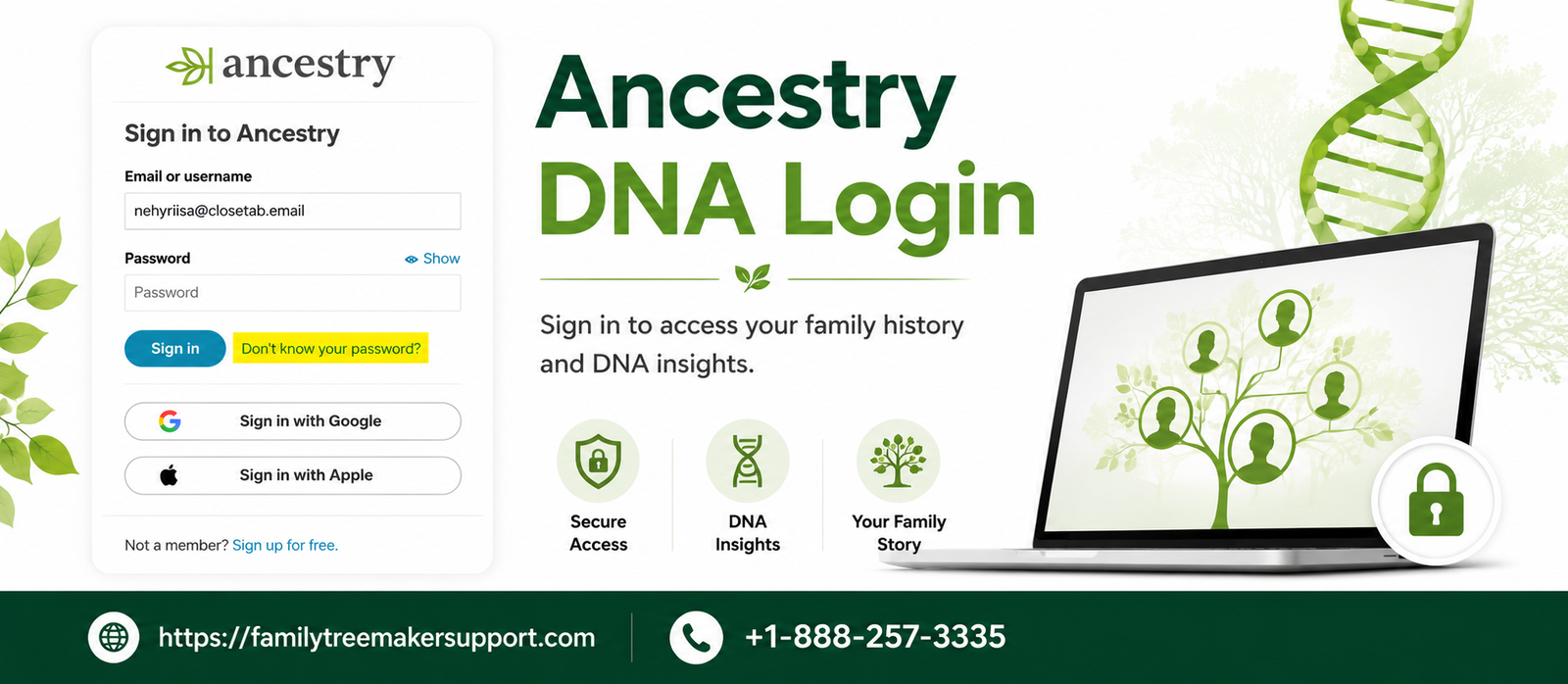
If you have already finished your Ancestry DNA Test, signing in to your account is one of the first steps which help you to view your ethnicity estimate, discover DNA matches and properly explore your family tree. Your ancestry account properly secures all of your DNA results, family history and records based on the subscription at one place.
Whether it is your first time logging in, you are returning after a long break or facing some kind of troubles while accessing the account or having a thorough understanding of the Ancestry DNA Login process can help in saving time and preventing frustration.
This guide will walk you through the procession of how to sign in to your ancestry account, get access to your DNA results and family tree, Troubleshoot common login problems, reset your password and keep your account secure from uninterrupted access into your genealogy research.
Ancestry DNA Login : An Overview
Ancestry DNA Login stands for the process of signing in into the ancestry account in order to access all of your DNA results, family tree and genealogy records. After logging in with the help of a registered email address and password, you can easily view all of your ethnicity estimates, explore the DNA matches, properly manage your family tree and bring ancestry features into use from any of the supported devices.
Difference Between Ancestry Account And Ancestry DNA Kit
Here is the major difference between both the ancestry account and Ancestry DNA Kit:
- Ancestry Account
It is your online account where you store all of your family trees, DNA results, subscriptions, and account settings. ighly required to sign in and manage your information.
- Ancestry DNA Kit
It is a physical DNA testing kit that you purchase and use to collect your saliva sample. Right after your sample is processed, you activate the kit and link it to your Ancestry account to view your results.
Benefits Of Logging In
There are a number of benefits of signing in to your Ancestry account:
- You can view your DNA ethnicity estimate and inherited regions.
- Easy to explore and contact all of your DNA matches
- Helps in building, editing, managing and Deleting a Family Tree from Ancestry.
- Get access to your historical records and family history discoveries (an eligible subscription is required)
- Properly track the status of your DNA kit and test results.
- Have an update of all your account settings, privacy preferences, and subscription details.
- Properly sync your family tree with the help of genealogy software such as Family Tree Maker if it is applicable.
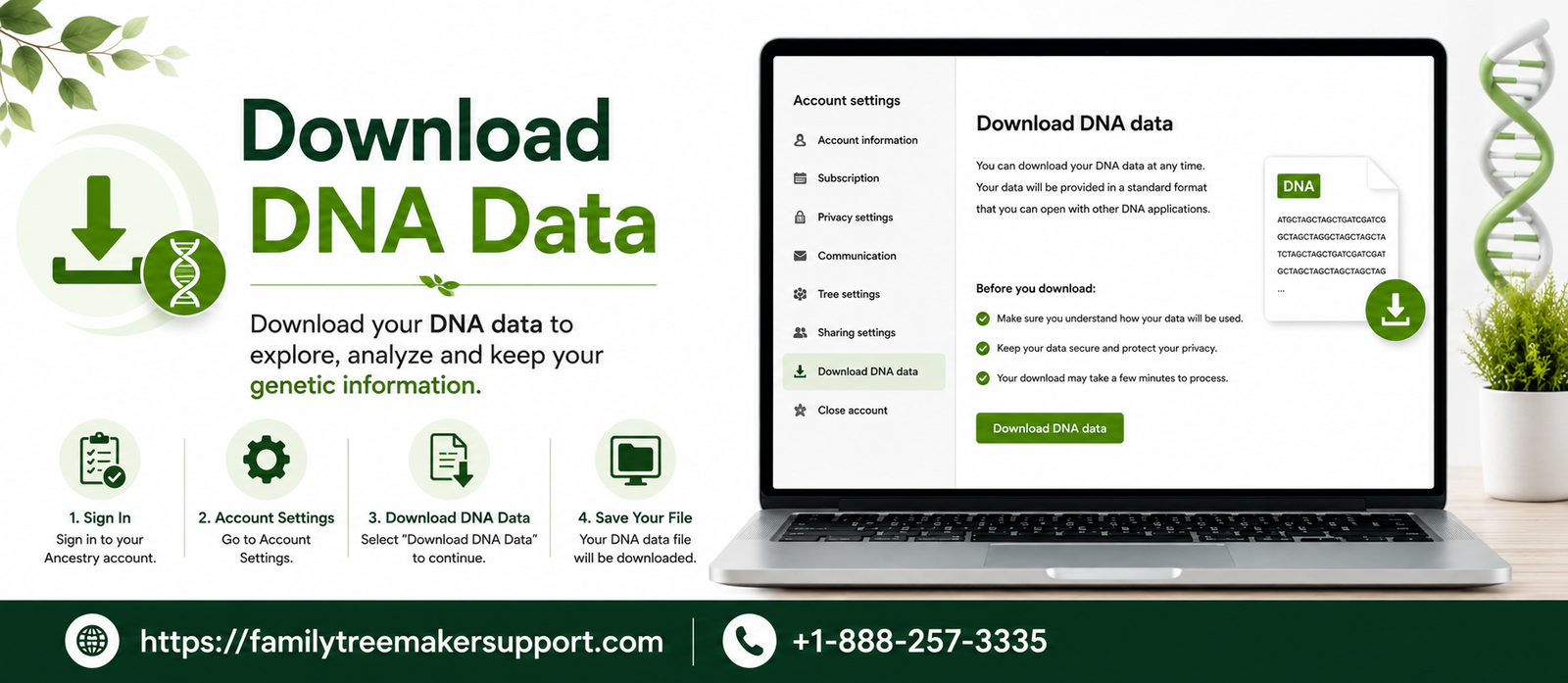
- Downloading DNA data for personal backup or use with compatible third-party DNA services.
How To Sign In Ancestry DNA Account
Within a few minutes , you can easily Sign in Ancestry account. Adhere to the steps below to get access to your DNA results, family tree, and genealogy records.
- Visit The Ancestry Website
Open the web browser you prefer and head to the official Ancestry website. Ensure you are using the right website to keep your account secure and prevent phishing scams.
- Tap On Sign In
Open the homepage and click the Sign In button, which is located in the upper-right corner of the screen. It will take you to the login page.
- Enter Your Email/Username And Password
Type the email address or username that is related to your Ancestry account; after that, enter your password. Check for typing errors, especially if you’re using a new device or browser.
- Complete The Two-Step Verification
If you have turned off the two-step verification, you will receive a verification code from Ancestry to your registered email address or mobile number. enter the code in order to confirm your identity and complete the sign-in process.
- Access Your DNA Results And Family Tree
Right after you sign in , you will be taken to your account dashboard. From there, you can easily look for the DNA ethnicity estimate , explore DNA matches, build and manage your family tree, review all relatives and perform tasks including Ancestry Merge Trees to combine duplicate profiles and easily improve the accuracy of your research.
How To Activate An Ancestry DNA Kit
In order to view your DNA results, you must activate your Ancestry DNA kit and link it to your Ancestry account. With activation, you get a guarantee that the DNA sample is properly associated with your account.
- Sign In To Your Ancestry Account
Visit the Ancestry website and open the Ancestry app and sign in with the help of your registered email address (or username) or password. If you have not created an account yet, simply create one right before activating your kit.
- Mention The Activation Code
Locate the unique activation code included with your Ancestry DNA kit. After signing in, choose the option to activate a DNA kit and enter the code exactly as it appeared on the collection tube or activation card.
- Link The Account With Your Kit
After the verification of activation code, the DNA will be linked to your ancestry account. check the information, confirm the activation and adhere to any additional on screen instructions to complete the process.
- Submit Your Sample And Wait
Right after the collection of your saliva sample as per the kit instructions, seal the collection tube and mail it by using the prepaid return package (where it is available). Once ancestry gets your sample, it will go through the testing and analysis process. This will typically take a few weeks and you will receive an email notification when your DNA Results are all set to be viewed in your account.
What If You Forget Your Ancestry Password?
If you forget your password, you can reset it with simple steps and regain access easily. Go through the steps below to do so:
- Tap On “Forgot Password”
Head to the Ancestry sign-in page and click the “Forgot password?” link at the bottom of the login form.
- Mention Your Registered Email
Enter the email address linked to your Ancestry account, then submit your request.
- Check Your Email
Ancestry will send a password reset email. Click the email, open it, then click the reset link provided
- Create A New Password
Enter a new, strong password that you have not used before, then click the reset button to complete the process.
- Log In Once More
Return to the Ancestry login page and sign in with the help of your registered email address and your new password. You can now easily access your DNA results, family tree, and other features of the account.
Usual Ancestry DNA Login Issues
Even if signing into your Ancestry account is easy, there are several issues you will face while logging in. Here are some of the problems related to login issues mentioned below:
Wrong Email Or Password
Entering the wrong email address or password is one of the most common login issues. Please check your credentials twice, make sure the caps lock is turned off, and try again. If you have forgotten your password, use the “Forgot Password?” option to reset it.
Navigate Cache And Cookies Issues
Outdated cache or corrupted cookies can prevent the Ancestry login page from working properly. Clear your browser’s cache and cookies, then refresh the page or try to sign in with a different browser.
Two-Step Verification Issues
If you have enabled two-step verification but are not receiving the verification code, check your spam folder, make sure your phone number or email is correct, and request a new code. Ensure your device has a stable internet connection.
Account Got Locked Or Suspended
An unsuccessful number of attempts will temporarily lock your account for security reasons. Wait a while before trying again, or reset your password to regain access. If the issue persists, contact Ancestry Support for assistance.
Trouble While Loading The Website
If the website is unable to open, check your internet connection and refresh the page. Try opening the site in another browser or turn off any browser extensions that may interfere with loading.
Issues Related To The Mobile App
If you are finding it hard to sign in through the Ancestry mobile app, update the app, restart your device, or reinstall the app. Make sure you are using the correct account credentials and have a stable and active internet connection.
Media Sync Issues
In some cases, users may also experience Ancestry Media Sync Issues where photos, documents, or other media files fail to sync properly between Ancestry and compatible genealogy software.
How To Secure Ancestry DNA Login
Take help of the points given below to secure the AncestryDNA login to protect your personal information, family tree, and DNA results.
Use A Strong Password
Create a unique password that combines uppercase and lowercase letters, numbers, and special characters. Do not use common words, birthdays, or passwords that you are using for other accounts.
Enable Two-Factor Authentication
Turn on two-factor authentication (2FA) for added security. Every time you sign in from a new device, you will be asked to verify your identity with a one-time code.
Don’t Use Public Wi-fi
Public Wi-Fi is considered less secure if you need to access your Ancestry account while away from home, use a trusted network or a secure VPN connection.
Keep Your Recovery Email Ready
ensure your recovery email address is current and accessible. This will allow you to reset your password and recover your account quickly if you lose access.
Conclusion!
Your AncestryDNA Login is the way to explore your family history, view your ethnicity estimate, discover DNA matches, and manage your family tree in one place. With a thorough understanding of how to sign in, activate your DNA kit, recover your password, and troubleshoot common login issues, you can easily access your genealogy information with confidence. To keep your account safe, use a strong password, enable two-factor authentication, and keep your recovery information up to date. via simple steps and practices, you can easily enjoy secure and uninterrupted access to your Ancestry DNA results and family history whenever you need them.
For more information please do contact us.
Andy Smith is a genealogy researcher and family history specialist with over 10 years of experience in family tree research, ancestry records, and genealogy software. He specializes in Family Tree Maker, Legacy Family Tree, Ancestry, FamilySearch, and DNA-based family history research, helping users preserve and organize their family heritage.